
TPU material education · Guangzhou Yuehang · Published 14 November 2026
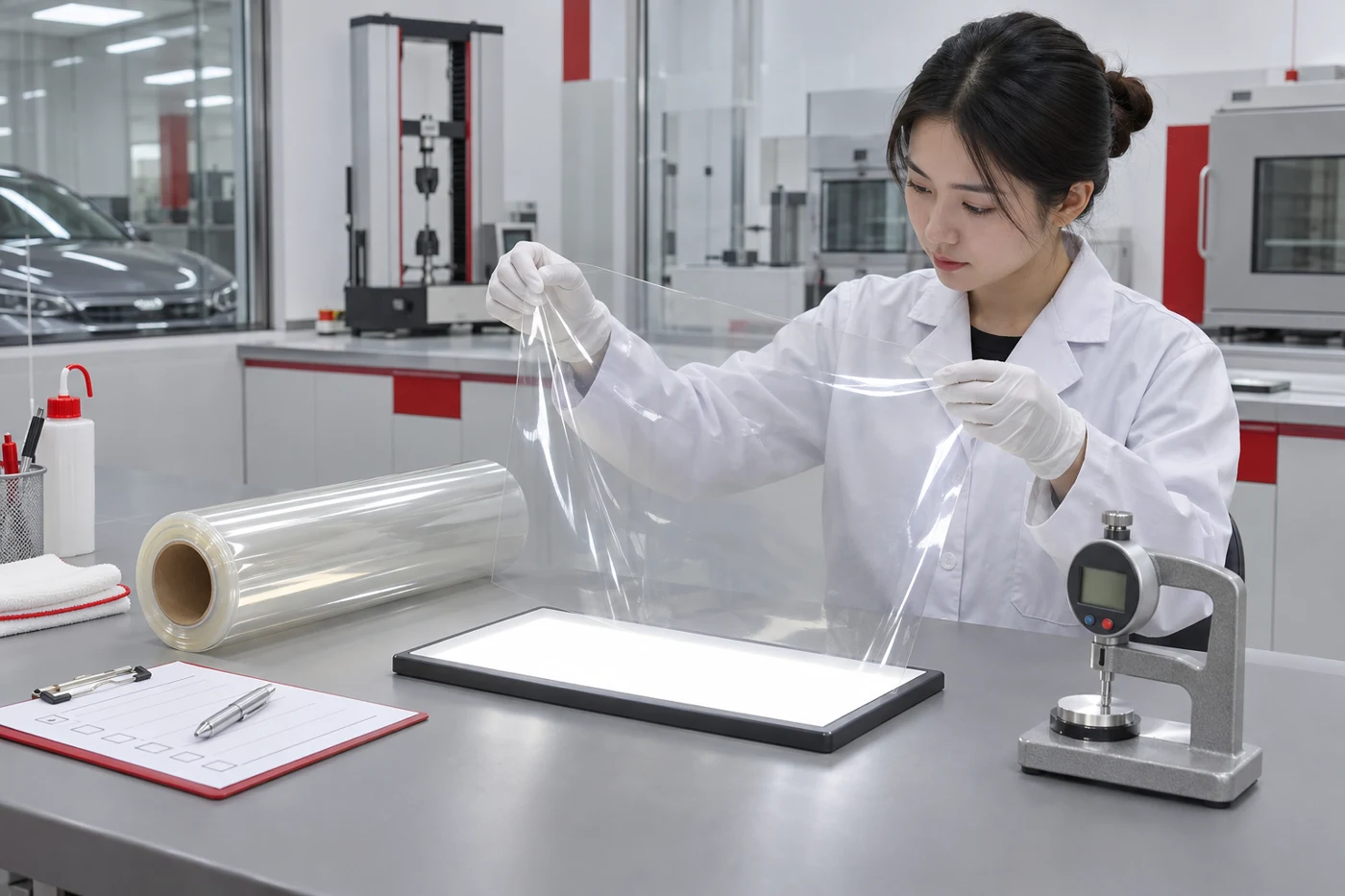
Look beyond a raw-material name and compare the finished film, coating, adhesive and supporting records.
Define the purchasing specification
Write down the application, finish, thickness basis, roll size and expected installation conditions. A clear purchasing specification makes sample evaluation more useful and helps prevent a quotation from being compared with a different construction.
Evaluate more than the headline claim
Inspect clarity, visible surface defects and release behavior, then arrange an installation trial on the intended surface. For products promoted with self-healing behavior, ask for the coating-specific test conditions and limitations. A small surface-mark demonstration is not proof that cuts or deep damage will disappear.
Ask for relevant evidence
Check that any supplied test report identifies the product tested and the test conditions. Where outdoor appearance matters, discuss suitable aging and color-change evidence. Do not treat a general material brochure as a finished-film warranty.
Keep the approved sample connected to the order
Agree how the grade and batch are identified, how the rolls are packed, and what to inspect on arrival. Keep the approved sample, quotation and packing list together. A short acceptance checklist is more useful than relying only on a long list of marketing features.
Further technical reading
Example of coating-specific self-healing description ↗
External technical references explain general material concepts; they do not certify our product grades.
Next article: Inside TPU Paint Protection Film: What Each Layer Does →